Commercial Auto & Spray Rigs for spray foam contractors
Commercial auto coverage for spray foam contractors' vehicles — proportioner trucks, chemical transport vehicles, service vans, and spray rigs — structured for equipment-intensive, multi-state spray foam insulation operations.
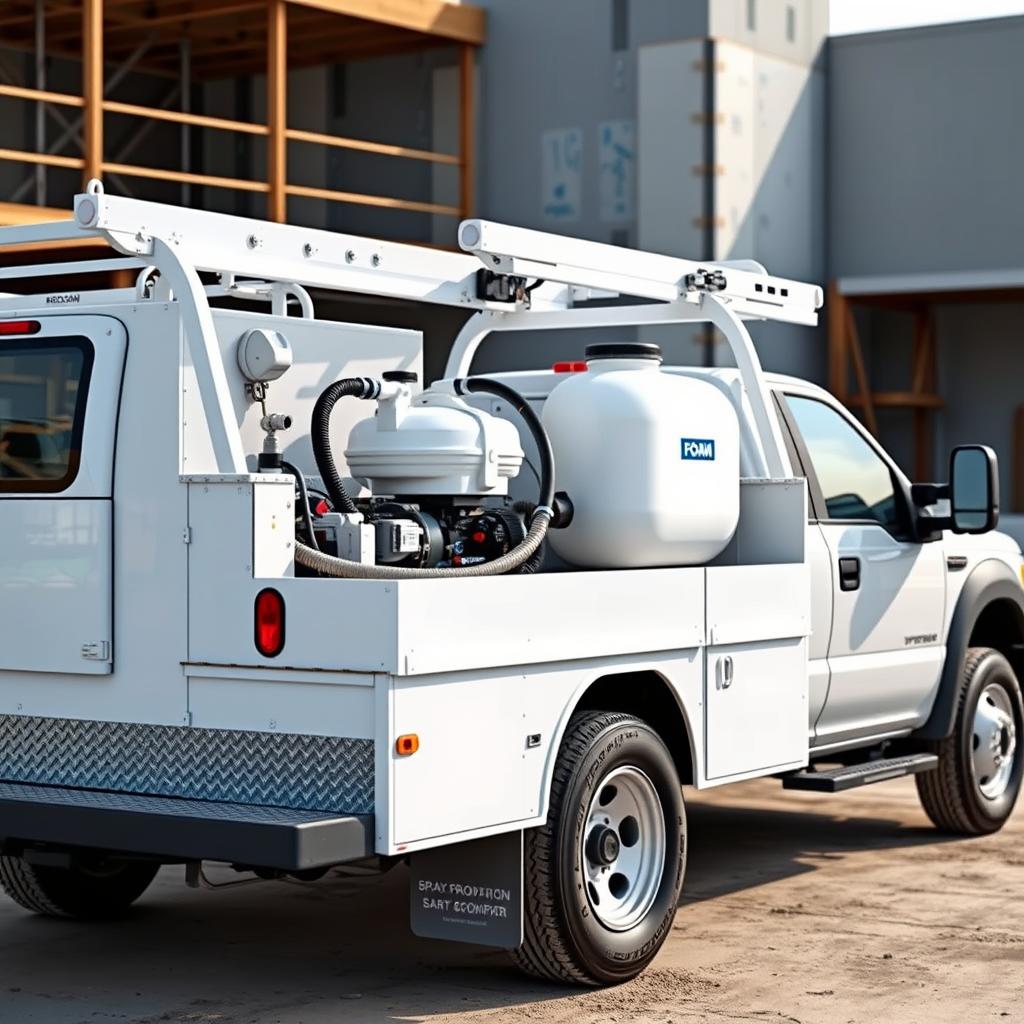
What it covers
- Liability for at-fault accidents involving foam rigs and chemical transport vehicles
- Physical damage to owned vehicles used for spray foam work
- Hired and non-owned auto for employees driving personal vehicles
- Equipment endorsements for proportioners and spray equipment on vehicles
- Multi-state operation coverage for contractors who travel for commercial jobs
- Loading and unloading liability for chemical handling
Who it's for
- Any spray foam contractor with owned vehicles (trucks, vans, spray rigs)
- Contractors transporting two-component foam chemicals on public roads
- Operations whose vehicles carry proportioning machines and spray equipment
- Businesses whose employees drive personal vehicles for work errands or site visits
Why CCA
- Commercial auto structured for the spray foam exposure — chemical transport, equipment-carrying vehicles, and multi-state travel
- Coordinates with tools and equipment coverage for the proportioner and gear on the vehicle
- Fleet programs for contractors with multiple rigs
Common questions about commercial auto & spray rigs
Yes — a vehicle carrying a proportioning machine, chemical drums, and spray equipment is a specialized commercial vehicle with different liability and physical damage considerations than a standard pickup truck. We structure commercial auto to reflect the actual nature of a spray foam rig.
No — the vehicle is covered by commercial auto; the equipment on it needs inland marine or tools and equipment coverage. We coordinate both so there's no gap between the vehicle policy and the equipment policy when a rig is involved in an accident or theft.
The A-side chemical (MDI isocyanate) has specific transport requirements. Commercial auto can be endorsed for chemical transport, and we confirm that the policy addresses the loading and unloading liability that comes with moving hazardous materials.
Hired and non-owned covers liability when employees drive personal or rented vehicles on business — running to the supply house, meeting a client, or traveling to a jobsite. Any spray foam business where employees occasionally use their own vehicles should carry this coverage.
Yes — commercial auto provides coverage across state lines. We confirm the policy's coverage territory and make sure the travel patterns of your rigs and crews are properly reflected in the program.
Cost is driven by annual revenue, crew size, job type (residential, commercial, roofing), states where you operate, equipment values, and loss history. We quote your actual operation in about 15 minutes — never a ballpark from a generic contractor form.
Yes. Contractors Choice Agency is licensed in all 50 states and writes spray foam programs nationwide — Texas, Florida, the Northeast, Midwest, California, Mountain States, and everywhere spray foam contractors operate.
Typically 15 minutes on a call. Larger or higher-risk programs may take a day or two to place with the right markets, but we move fast and set expectations up front.
Often yes. We have admitted and E&S markets for spray foam contractors declined over CPL history, prior claims, or other issues. Bring us your situation and we'll find a market.
Usually yes. A coordinated program — especially one that aligns GL and CPL — closes the gaps where most spray foam claims fall and is typically cheaper than separate policies from separate carriers.
A.M. Best ratings reflect a carrier's financial strength. We place coverage with A-rated carriers so the coverage is there when an off-ratio event, a pollution claim, or a property-damage lawsuit hits.
Yes. Residential foam contractors carry completed-operations and off-ratio exposure; commercial contractors add higher limits requirements, GC bonding, and larger pollution exposure. We tailor the program to your actual work mix.
Completed-operations covers claims that arise after the job is done — foam that off-gasses, expands incorrectly, or causes property damage. These claims need to be explicitly included in the GL policy; many generic contractor forms sub-limit or exclude spray foam completed-ops.
Annual revenue, crew size, job types (residential, commercial, roofing foam), equipment list and values, states where you work, current coverage, and loss history. The more detail, the more accurate and competitive the quote.
It depends on the structure. If you 1099 subs, you need to verify they carry their own GL and workers' comp — or add them as additional insureds. We help you structure a program that doesn't create gaps when subs are on your jobsites.
Yes, though some markets are more restrictive for startups. Having proper PPE, documented safety protocols, and trained applicators makes placement easier and pricing more competitive. We'll help you document what underwriters want to see.
Tools and equipment coverage pays for the stolen equipment. Standard commercial auto covers the vehicle, but the spray gun, hoses, and proportioner on it need dedicated inland marine or tools coverage to be insured against theft or damage on a jobsite.
Yes. If you operate multiple spray rigs and crews, we build one coordinated program covering all vehicles, equipment, and workers with no gaps — including fleet auto and a blanket tools policy.
We help you understand what underwriters require in terms of applicator certification (SPFA training, BPI, etc.) and can structure your program to reflect your crew's credentials, which can improve both placement and pricing.
Pair it with related coverage
Ready to protect your spray foam operation?
Get a 15-minute quote from specialists who understand spray foam insulation — off-ratio risk, VOC and isocyanate exposure, equipment-intensive operations, and chemical-application liability.