Contractor Pollution Liability for Spray Foam: The Coverage Your GL Excludes
By Josh Cotner
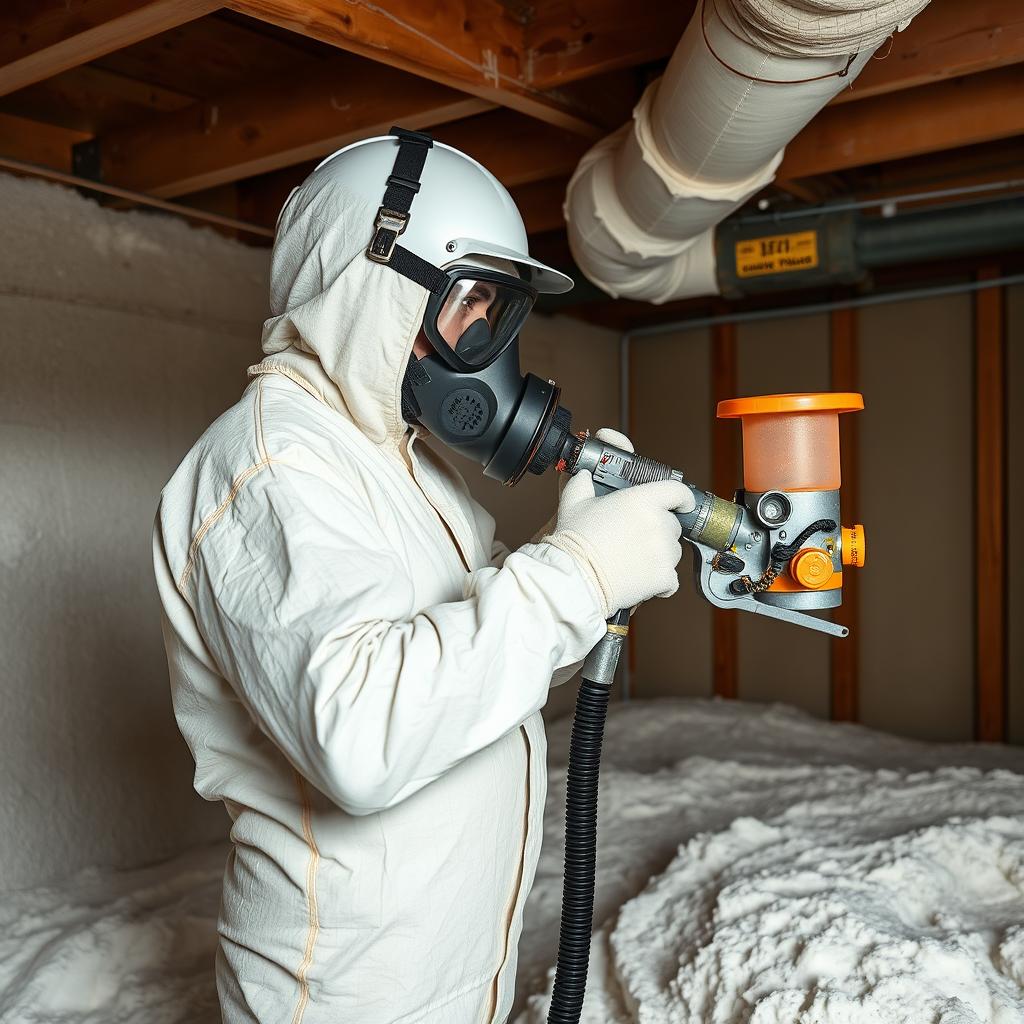
Contractor Pollution Liability for Spray Foam: The Coverage Your GL Excludes
Every spray foam applicator knows they're working with reactive chemicals. What most don't know is that those chemicals — the VOCs, MDI isocyanates, and blowing agents released during and after application — are classified as pollutants by virtually every general liability insurer in the country.
That classification has real consequences. It means third-party bodily injury claims from chemical exposure during your work are excluded from your GL policy before the underwriter even reads the details of the claim.
Contractor Pollution Liability (CPL) is the policy that covers what your GL can't.
What Happens During Spray Foam Application
When you pull the trigger on a spray foam gun, you're mixing two highly reactive chemicals — MDI isocyanate (A-side) and polyol resin (B-side) — that combine in an exothermic reaction. During and immediately after application, the foam releases:
Volatile Organic Compounds (VOCs) — released from the foam as it cures and from uncured foam that hasn't fully reacted. VOCs can cause headaches, dizziness, respiratory irritation, and in high concentrations, more serious effects.
MDI Isocyanates — methylene diphenyl diisocyanate is the primary chemical in the A-side. Aerosol and vapor during application can cause respiratory sensitization, occupational asthma, and hypersensitivity pneumonitis. Isocyanate sensitization is permanent — once sensitized, a person can react to extremely low concentrations.
Blowing Agents — used to create the cellular structure of the foam, these can include hydrofluorocarbons (HFCs) or other compounds that have their own inhalation exposure profiles.
All of these are treated as pollutants by the insurance industry.
The Pollution Exclusion in Your GL Policy
Your standard general liability policy contains language that reads something like this:
"This insurance does not apply to 'bodily injury' or 'property damage' arising out of the actual, alleged or threatened discharge, dispersal, seepage, migration, release or escape of 'pollutants'..."
The definition of "pollutants" typically includes:
"...any solid, liquid, gaseous or thermal irritant or contaminant, including smoke, vapor, soot, fumes, acids, alkalis, chemicals and waste."
VOCs, isocyanates, and blowing agents check every box in that definition. Which means when a tenant in a building you worked in claims they developed breathing problems from your foam application, or when a homeowner calls because their family experienced symptoms during the curing period — those are pollution claims, and they're excluded.
The GL policy that cost you $5,000 this year will pay zero on that claim.
What Contractor Pollution Liability Actually Covers
CPL is designed specifically for contractors whose work involves chemical exposure risk. Unlike the absolute pollution exclusion in your GL, CPL is built around chemical events as the primary insurable risk.
A spray foam CPL policy typically covers:
Third-party bodily injury from chemical exposure — bodily injury claims from building occupants, neighboring properties, or members of the public who allege harm from VOCs, isocyanates, or other chemicals released during your work.
Property damage from chemical releases — property damage caused by chemical contamination, including HVAC system contamination, surface contamination requiring decontamination, or structural damage from chemical exposure.
Cleanup and remediation costs — the cost to test, clean, and certify a space following a chemical release event, including air quality testing, professional remediation, and documentation.
Defense costs — full defense coverage when a bodily injury or pollution claim is filed, through investigation, litigation, and resolution.
Transport and storage — chemical events during the transport or storage of your A and B-side chemicals, including drum leaks or spills in transit.
Off-site migration — claims from neighboring properties where your chemicals migrated off the jobsite.
Common CPL Scenarios for Spray Foam Contractors
Occupied Residential Retrofit
You spray open-cell foam in the attic of an occupied home. The homeowner and their family stay in the house during curing (against your advice). Three days later, they report headaches, nausea, and respiratory irritation. They file a claim against you.
Under standard GL: excluded by the pollution exclusion. Under CPL: covered — bodily injury from chemical exposure during contractor operations.
Commercial Tenant Complaint
You spray closed-cell foam in the space below a commercial tenant's office suite. The tenant reports that a chemical smell has been present in their office for two weeks, affecting their employees' productivity and health. They retain an industrial hygienist who identifies elevated isocyanate concentrations and files a claim.
Under standard GL: excluded. Under CPL: covered — including the defense costs if the tenant pursues litigation.
HVAC Contamination
During application, overspray or chemical migration contaminates the building's HVAC system. The building owner must have the ductwork professionally cleaned and air quality certified before the system can be restarted. Cost: $18,000.
Under standard GL: likely excluded as pollution event affecting a third party's property. Under CPL: covered — property damage and cleanup costs from chemical release.
Off-Ratio Chemical Release
An equipment failure causes off-ratio foam with elevated isocyanate emissions. The building owner evacuates tenants, retains a remediation company, and files claims against the spray foam contractor for the cost of remediation and tenant relocation.
Under standard GL: excluded under both pollution and defective work exclusions. Under CPL + off-ratio coverage: covered — the chemical release component through CPL, the property damage from defective foam through off-ratio.
CPL Limits and What You Need
CPL is typically written on a per-occurrence / aggregate structure, similar to GL.
$1M/$2M — minimum for most residential-only contractors.
$2M/$4M — recommended for contractors doing commercial work or working in occupied buildings.
$3M/$6M or higher — for high-volume commercial applicators, industrial projects, or projects where the property owner requires higher limits.
CPL should be coordinated with your GL program. When both policies are placed through the same agency, claims that cross between pollution and general liability territory are handled cleanly — no finger-pointing between carriers about which policy is primary.
Why Spray Foam CPL Is Different from Environmental Liability
A common misconception: CPL and environmental liability (EIL) are the same product. They're not.
EIL is designed for property owners dealing with pre-existing contamination — brownfields, underground storage tanks, legacy pollution. It's a real estate and long-tail environmental product.
CPL is designed for contractors whose operations create chemical exposure risk during and immediately after the work. It's a short-tail product built around the contractor's operations, not the property's historical condition.
Spray foam contractors need CPL. They almost never need EIL.
How to Add CPL to Your Program
CPL is a separate policy that should be placed alongside your GL, not through the same form. Most standard commercial GL carriers cannot write CPL — it requires access to specialty environmental or contractor insurance markets.
When we place a spray foam contractor program, CPL is always part of the conversation. We coordinate the GL and CPL so there are no gaps between them — and so that when a claim arrives that could fall under either policy, the response is fast and the coverage is clear.
If you're a spray foam contractor without CPL, you're running without coverage on your most predictable claim type. That's worth a 15-minute conversation.
Need this coverage for your spray foam business?
Get a real quote in about 15 minutes — we shop A-rated specialty contractor markets.